
Operation Desert Fox 1998 & The Age of American Air Power Diplomacy

A Uniquely American Way of War
In December 1998, the United States and United Kingdom went to war in Iraq. It was a short air and naval strike campaign that, although historically forgotten, deserves far more historical examination. Punitive in nature, the campaign’s goal was to utilize force to compel Iraqi Ba’athist dictator, Saddam Hussein, to grant United Nations weapons inspectors full access to Iraq’s remaining WMD (weapons of mass destruction) stockpile. Operation Desert Fox (ODF) represented the fourth and most powerful post-Gulf War strike against Saddam’s regime. Containing the Iraqi dictator while fomenting rebellion and internal dissent against his rule produced a new post-Cold War trend in the application of American expeditionary warfare. Learning the lessons of this new method of American diplomatic coercion can allow modern warfighters and policy makers to see that our contemporary operations possess foundations that can be found in campaigns like ODF.
After the fall of the Soviet Union and the Warsaw Pact military alliance, the United States faced a unipolar moment. It was the sole remaining superpower capable of projecting unmatched conventional military capability abroad. The overwhelming victory of the 1991 Gulf War showcased America’s might at the dawn of a revolution in military affairs (RMA). Smart bombs, cruise missiles, and a constant streaming of strike impacts on newsfeeds promoted a new American standard for war. The invention of the 24-hour news cycle combined with the precision and unmatched nature of American firepower produced a new level of public attention on battlefield results in near real time. Today, this RMA has metastasized into a near instant stream of battlefield updates for the everyday citizen in the form of a small handheld device which can provide any information, from anywhere, at any time. The speed of a weapon system is only outmatched by the speed of information and the instant reaction a public may have to that weapon’s impact only minutes after it has hit its target told now through a 24-hour opinion and commentary cycle. The battle for the speedy narrative is now almost as important as the actual military effectiveness from real weapons impacting their targets.
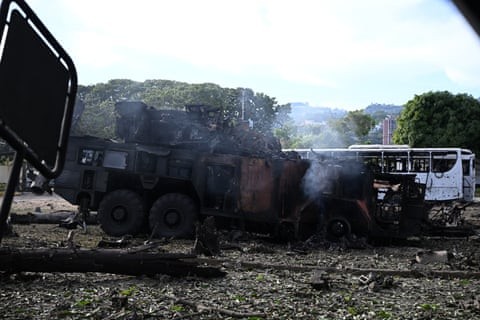
The post-1991 American containment of Saddam Hussein’s Iraq produced a new age of American coercive diplomacy. The Bush and Clinton Administration’s use of superior military technology applied through air power and long-range precision strike capabilities culminated in the December 1998 ODF Campaign. This campaign, often under-examined, provides an early example of modern American geo-strategic doctrine as seen in post- Global War on Terror (GWOT) operations.
Saddam After 1991
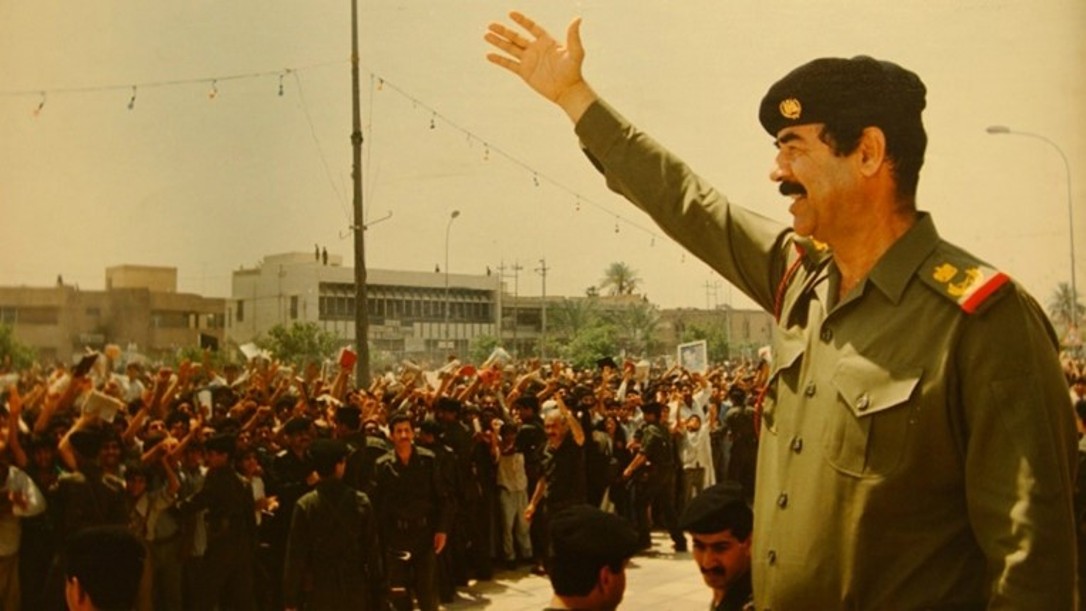
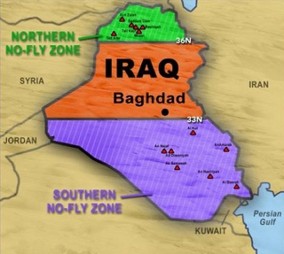
After Iraq’s crushing military defeat during Operation Desert Storm, a series of internal threats to Saddam’s Regime in Baghdad sparked across several areas of the country. North of Baghdad, the Kurds continued their decades long rebellion with even more vigor. Coupled with a Shia uprising in the south, Saddam’s hold on power had never looked more unstable. American airpower instituted “no-fly zones” in the north and south of Iraq to enable rebel forces in their multi-front fight against Baghdad.
Operations Northern and Southern Watch
Saddam’s integrated air defense apparatus, once the most numerous and sophisticated in the Middle East, was effectively neutered by coalition airpower in 1991. Operation Provide Comfort (OPC) was initiated to protect the Kurdish population of Northern Iraq from the threat of Iraqi aircraft dropping bombs and using chemical weapons. After two no-fly zones (NFZs) were put in place, Iraqi surface to air missile units (SAMs) fired at Coalition aircraft over 150 times.[1] The Coalition, in response, initiated Operations Northern and Southern Watch. A back-and-forth battle between Allied air defense suppression and Iraqi air defense units continued until the Iraq Invasion in 2003. To the south, Operation Southern Watch (OSW) was tasked with limiting Iraqi air power in quelling a Shia led rebellion against Saddam in the aftermath of the disastrous war in Kuwait. To the North, Operation Northern Watch would provide the same level of coverage to the Kurds.[2]
Although Saddam’s seat of power in Baghdad looked vulnerable, it did not collapse. His successful internal repression and brutal crackdown of the uprisings against him, in a way, solidified his power even more. To protect the regime, another splinter element of Saddam’s protection forces was carved from the Republican Guard. Seen as Saddam’s Pretorian Guards, the Republican Guard represented the elite of the Iraqi military and pledged personal loyalty to Saddam’s rule. The Republican Guard heavy divisions suffered critical losses in 1991 but remained intact enough to reconstitute and consolidate around Baghdad. Fearing even more internal threats, Saddam established the Special Republican Guard, another full division sized element which was the only military formation allowed within the city limits of Baghdad. With a new counter-coup apparatus in place, the rebellions stabilized, and Iraq’s military still intact after 1991, Saddam had turned the corner. Through the storm of defeat and rebellion, Saddam achieved what every dictator desires, remaining in power. The battles over the future of Iraq, Saddam, and his Weapons of Mass Destruction (WMD) arsenal would plague the new Clinton Administration through the rest of the 1990s.
Skirmishes, Sabre-Rattling, and Inspections
After 1991, a series of “punitive” kinetic strike campaigns against Saddam for failing to adhere to the United Nations Special Commission (UNSCOM) inspections on Iraqi WMD sites and offensives against rebel forces opposing his regime persisted in the form multiple operations including:
- January 1993 Airstrikes on Iraq
- June 1993 Cruise Missile Strikes on Iraq
- 1996 Operation Desert Strike (ODS)
- 1998 Operation Desert Fox (ODF would be the longest, largest, and most intense of these punitive campaigns)
In September 1996, Saddam deployed three of his elite Republican Guard Divisions North to make an offensive drive at the Rebel-Kurdish city of Erbil. This offensive was in direct defiance of United Nation’s Security Council Resolutions, and the United States initiated Operation Desert Strike. A Carrier Battle Group, centered around USS Carl Vinson, launched 43 RGM/UGM-109 Tomahawk Land Attack Cruise Missiles (TLAMs) at Iraqi targets, alongside 2 B-52H “Stratofortress” strategic bombers of the 96th Bomb Squadron, 2nd Bombardment Wing, U.S. Eighth Air Force, who launched 13 AGM-86C CALCMs (Conventional Air Launched Cruise Missiles).[3] Despite these strikes, Saddam was intransigent. Further behavioral correction would be required.
Desert Thunder to Desert Fox
The Iraq – UNSCOM inspection crisis came to a head throughout 1997 and into late 1998. Famous author Tom Clancy in his book Battle Ready, explains the Persian Gulf situation in 1998 when he writes:
At the end of the First Gulf War, Iraq had agreed to the UN- supervised destruction of its weapons of mass destruction (WMD) and the programs to develop and build them. That agreement had been a lie. The Saddam Hussein regime had never intended to give up its WMD program, and for the next seven years it had conducted a running battle with UNSCOM, the UN inspection operation in Iraq, to protect its programs in any way possible . . . by hiding them, moving them around, lying, stonewalling, delay, and noncooperation.[4]
As 1998 approached and Saddam grew increasingly defiant towards allowing the inspectors in, Operation Desert Thunder was initiated to gradually increase the force presence in the region should hostilities commence.[5] President Bill Clinton and British Prime Minister Tony Blair made the decision to utilize force to compel Saddam to adhere to inspections. The declassified ODF documents provided through the Clinton Presidential Library outline the following American political objectives:
The principal objectives for this strike are to reduce the threat Iraq poses to the region and to the world from the WMD and missiles it has maintained (or could regenerate in the absence of adequate UNSCOM and IAEA inspections) and to weaken the regime’s hold on power, which will reduce Iraq’s WMD threat. Therefore a strike would be designed to: degrade Saddam’s WMD and conventional military capability, thereby reducing this threat to his neighbors and; weaken his command and control over his military and his people, increasing the chance that those Iraqis who want a different future for Iraq can change their leadership, and lead to an Iraq that complies with UNSCRs.[6]
At the end of the Gulf War, Saddam accepted and supported United Nations Security Council Resolution 687 (UNSCR 687) which established the UNSCOM. The UNSCR 687 directed Saddam’s government to “destroy, remove, or render harm-less” all weapons of mass destruction as well as any missiles that could travel beyond 150 kilometers. There were to be three phases to this resolution and inspection process which involved Iraq identifying all WMD and missile inventories, verification of the accuracy of the inventories by the UNSCOM inspectors, and finally the joint UN-Iraq destruction of all materials declared and confirmed.[7]
Strikes during ODF were also designed to drive a deep wedge between elements of the Republican Guard and the rest of the regular Iraqi Army. The hope was that a significant rift between the two caused by preferential targeting could induce a coup de ’tat. The largest coalition military force in the Gulf since 1991 had been assembled to launch the campaign.
The international community gave Saddam one last chance to resume cooperation with the weapons inspectors. Saddam has failed to seize the chance. So, we had to act and act now.[8]
— President Bill Clinton
The Desert Fox Campaign
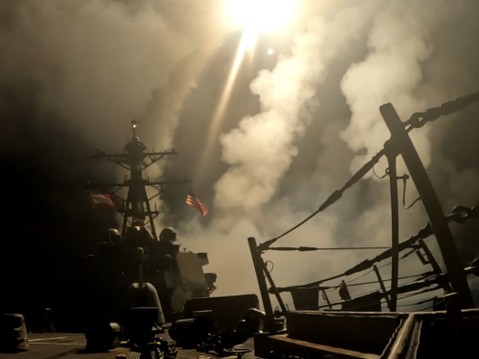
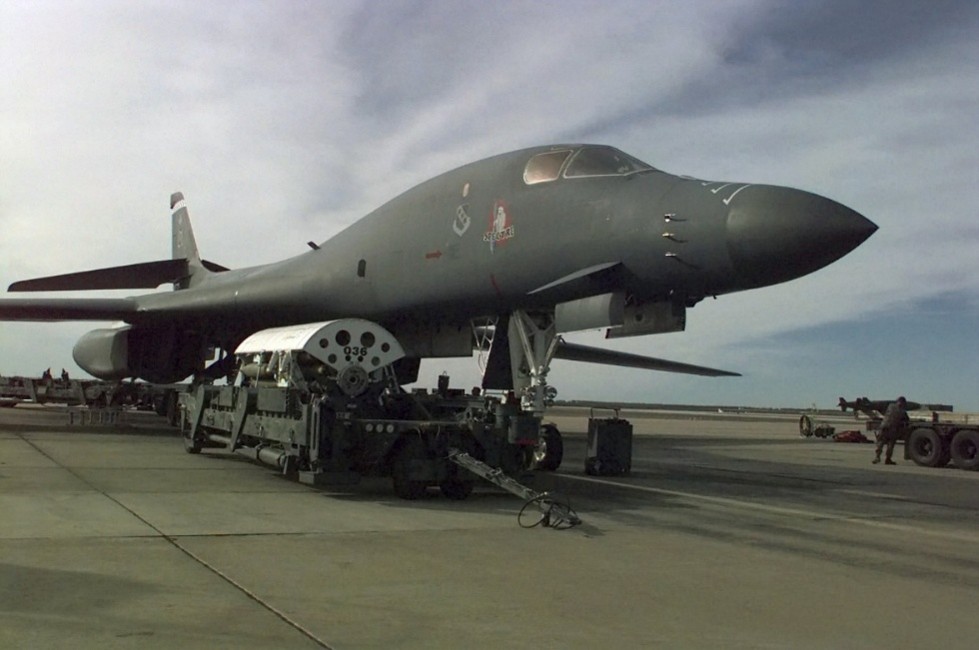
On 16 December 1998 U.S. Central Command (CENTCOM) under the command of U.S. Marine General Anthony Zinni launched Operation Desert Fox at the direction of the President to compel Saddam Hussein to adhere with United Nations inspections.[9] During the campaign, the B-1B “Lancer” long-range strategic bomber, commonly referred to as The Bone, received its first combat debut.[10] On top of carrier air power, bombers, other joint-combined tactical aircraft, and cruise missiles were used in large numbers. More air and sea launched cruise missiles were used in the almost 4-day 1998 air war on Iraq than during the entire 1991 Gulf War and Operation Deliberate Force in Bosnia combined.
Prior to the execution of ODF, General Zinni determined it would be necessary for the U.S. to strike Saddam with forces that were already in theater. During previous large CENTCOM buildups, Saddam could anticipate pending U.S. action; therefore, he could use that buildup time to move and cover potential targets. If the U.S. could achieve tactical surprise before Saddam could move his sensitive targets by launching rapid strikes from units already in theater long term, the effect of ODF would achieve a greater volume of success. Saddam’s intelligence had advised that an American strike was unlikely. CENTCOM’s forces already present in theater had lulled Iraq into a state of complacency. To further complicate and politicize matters, the President was under the guns of an impending impeachment trial for a sexual affair in the White House. Furthermore, the Muslim fasting period of Ramadan was to start on 20 December. With only 1 aircraft carrier in the Persian Gulf, USS Enterprise (CVN-65), American domestic political dysfunction present, and attacking a majority Muslim country right before a sensitive holy period, ODF caught Saddam off guard.[11]
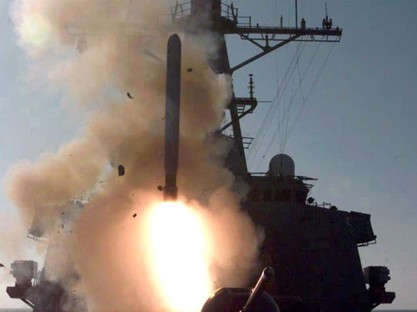
On 16 December 1998, Operation Desert Fox was initiated with over 250 TLAMs launched from ships and submarines in the Persian Gulf, followed by a 33-aircraft strike package from USS Enterprise’s Carrier Air Wing-3 (CVW-3).[12] The following night on 17 December, two B-1Bs, one from the 7th and one from 28th Bombardment Wings (SLAM 01 and SLAM 02), took off from Sheik Isa Air Base in Bahrain. The bombers’ target that night was downtown Baghdad. E-8C Joint Surveillance Target Attack Radar System (JSTARS) aircraft assisted the bombers by providing constant target update information.[13] For pre-strike target characteristics and post-strike damage assessments, the 76th Space Operations Squadron utilized their overhead satellite imagery. Over the four-day air war, B-1Bs flew three 2-ship sorties and dropped many 500-lbs Mk 82 bombs. The 17 December strike package was a joint effort. The B-1Bs were escorted by F-14 “Tomcats” off the Enterprise, while a single EA-6B “Prowler” electronic attack aircraft provided electronic countermeasure support. A further six F/A-18 “Hornet” fighters executed strikes in support with two more Hornets postured to execute suppression of enemy air defenses (SEAD). Air Force E-3C “Sentry” Airborne Warning and Control Systems (AWACS) provided critical support throughout. The package began their turn North towards Baghdad while over Tallil in Southern Iraq an Iraqi SA-6 “Gainful” surface to air missile (SAM) battery turned on their “Straight Flush” target illumination radar (TIR). The Prowler rapidly dispatched the SAM site’s TIR with a single AGM-88 high speed anti-radiation missile (HARM).[14]
Flying on night vision, the B-1B crews feinted towards Al Kut before finally converging on Baghdad. As they approached their target, the night sky erupted with unguided Iraqi anti-aircraft artillery (AAA) fire. Undeterred, the B-1s pressed the attack, dropping their 120 Mk-82 bombs on the Al-Nida Republican Guard Armored Division barracks northwest of the Iraqi capital, inflicting severe damage.[15] (38)
Upon egress of the target area, the strike package was engaged by one SA-2 “Guideline” SAM. This mission played an important part in driving a wedge between the Iraqi regular Army and Saddam’s elite republican guard.
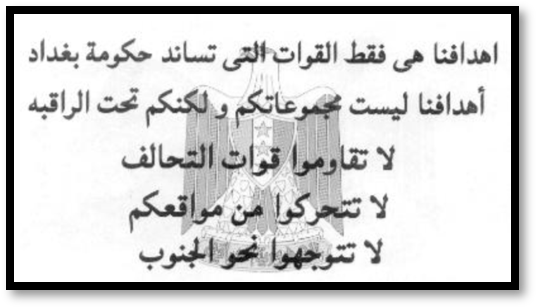
In B-1B Lancer Units in Combat, Author Thomas Withington writes, “Psyops’ missions had dropped leaflets days before, informing regular Army units that they would not be deliberately targeted during the operation. The B-1B raid on Al Kut was seen as a pivotal part of this strategy.”[16] The Al-Kut mission was carried out inside the center of Saddam’s air defense weapons engagement zone (WEZ). The B-1Bs that carried out the raid on Al-Kut were noted by Rear Adm Thomas R Wilson, vice director for intelligence for the US DoD Joint Chiefs of Staff, as having dropped all non-precision guided, free falling munitions, walking the stick of bombs onto the target in the classic sense.[17] Manned bomber aircraft entering the heart of an enemy’s WEZ is a very high-risk endeavor. Despite a heavy degradation during the 1991 Gulf War, several SEAD engagements throughout the 1990s during Operations Northern Watch, Southern Watch, and Desert Strike demonstrated that the Iraqi integrated air defense systems (IADS) in 1998 were still a threat to coalition aircraft. These batteries included many Soviet-made types such as SA-2, SA-3, SA-6, MANPADS (man portable air defense systems), various calibers of AAA, and radar guided ZSU-23-4.[18]
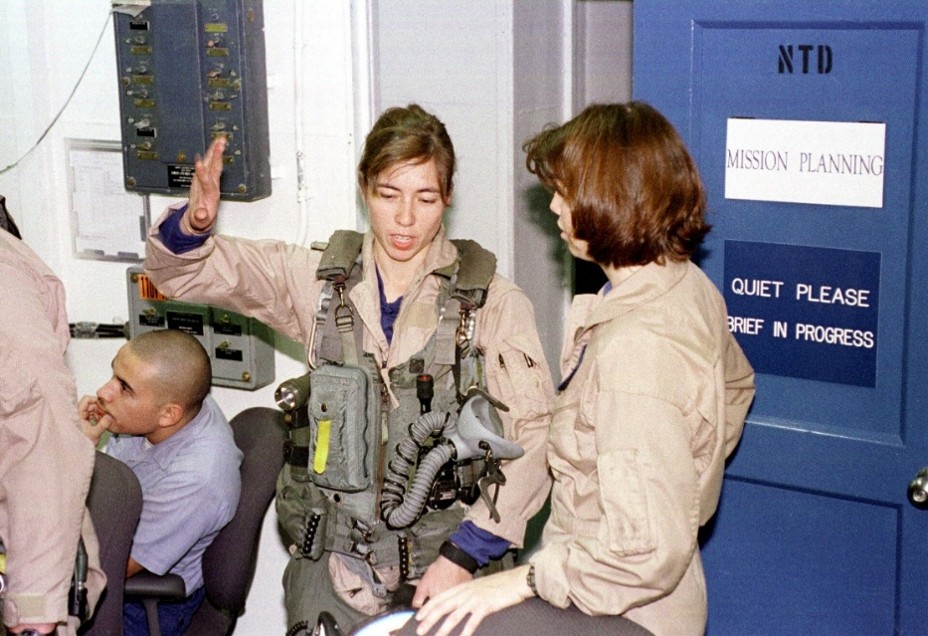
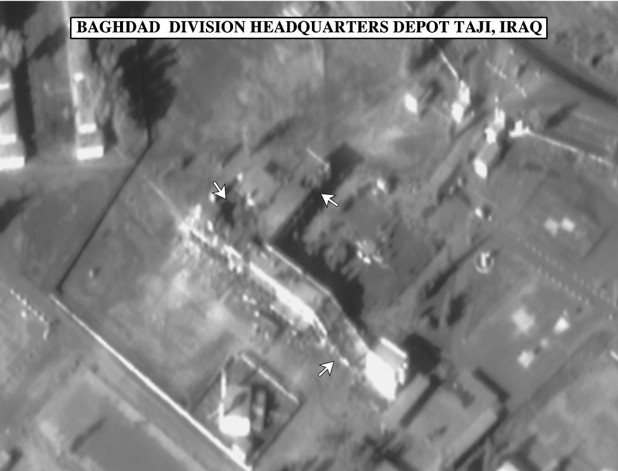
The other bomber used by the U.S. Air Force in ODF was a more mature platform with decades of combat experience as America’s principle strategic bomber, the B-52. Alongside their B-1B brethren, on 17 December, twelve B-52Hs (split into two flights of six bombers each) launched missions against Iraq. The first flight of 6, callsigns Ruben 11-17, was from the 96th Bomb Squadron. The second flight consisted of six B-52s of the 23rd Bomb Squadron, callsigns Blade 21-27. After mid-air refueling from KC-10As, the bombers launched 74 AGM-86 Block 1 CALCMs at Iraq’s Ministry of Defense and a further 6 CALCMs at Saddam’s Palaces.[19] Two more B-52Hs launched 16 CALCMs with one of the crew members, 1LT Cheryl Lamoureux, becoming the first USAF female aircrew member to ever fly a combat mission.[20] Author Peter Davis describes this mission stating, “Weapons and research sites for WMD were targeted, as well as air defense installations, eight Republican Guard HQs (to weaken Saddam Hussein’s control), Ba’ath Party palaces and an oil refinery in Basra – the latter was hit by a pair of B-1B Lancers to end Iraq’s illegal oil exports.”[21] Missile fabrication facilities were destroyed at both the Ibn al Haytham missile research and design center and the large Taji plant, where SA-2 and SA-3 SAMs and control radars were repaired, causing severe damage to three buildings.
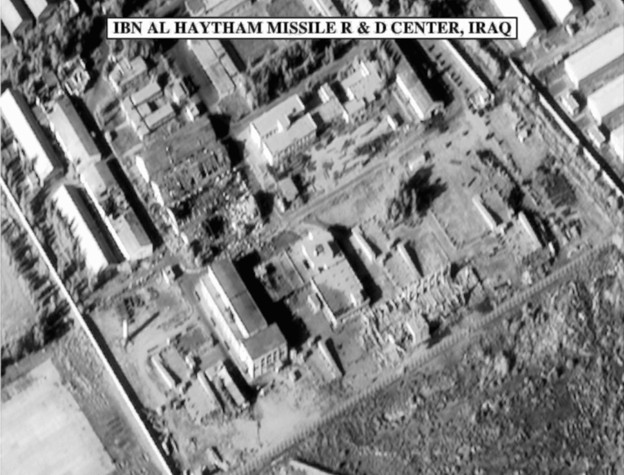
The latter factory was also developing the technology for long-range ballistic missiles that could have carried Iraq’s WMD warheads to foreign targets. Some of the country’s remaining Scud-B ballistic missiles, disassembled so as to be hidden, were also destroyed, although many more were still thought to be secreted away throughout Iraq. Finally, early warning radars and 34 air defense facilities were eliminated, opening up the target areas for B-52H attacks the following night.[22]
Aviation historian and author Peter Davies sums up Desert Fox writing:
Coalition aircraft flew more than 656 combat sorties (all at night), hitting 97 military targets and firing 90 CALMs, without suffering any losses. Thirteen targets allegedly associated with WMD production were hit, along with many others that were clearly intended to weaken Saddam Hussein’s control of his military hegemony. However, its long-term effects on the president were as unsuccessful as the attempted coup by the Iraqi Army’s 3rd Corps at the same time…In four days the majority of the selected targets had been destroyed or sufficiently degraded. This allowed Secretary of Defense William Cohen to claim that ‘Saddam’s missile program has been set back by at least a year’. Desert Fox was the most determined use of Coalition offensive power in the period between Desert Storm and Iraqi Freedom, and it demonstrated that the US could launch large-scale attacks from carriers in the Northern Arabian Gulf and bombers from Diego Garcia without having to rely on any specific Gulf states for basing rights.[23]
Aftermath, Legislation, the Road to 2003, & Lessons for Today
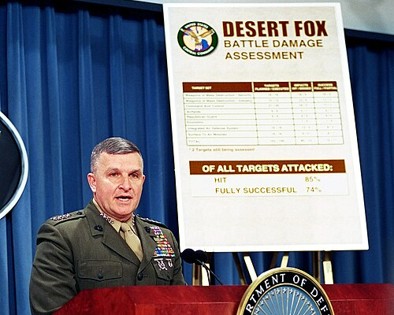
In the aftermath of ODF the results were substantial. According to the Pentagon, during the 70-hour air war, 85% of the 100 selected targets were hit. 74% of the targets struck were deemed “highly effective”. Approximately 600 coalition sorties were flown in that 70-hour period with 300 of those being flown during periods of darkness (POD) while sustaining ZERO losses. Coalition aircraft expended 600 air to ground munitions, 90 air-launched cruise missiles, and 325 TLAMs.[24] CENTCOM Commander, Gen. Zinni estimated during the 21 December post-operation press conference that the campaign had set back the Iraqi missile program for 1 to 2 more years.[25] Post-action reports estimate that some 600 Special Republican Guard troops were killed and over 800 of the regular Republican Guard.[26]
The post campaign Clinton political “Day After” plan was the following[27]:
- We will support the return of UNSCOM and IAEA inspectors to Iraq only after Iraq affirmatively and credibly confirms its full cooperation with them. We will develop a diplomatic gameplan for securing such assurance with the Security Council.
- We will maintain a robust military presence in the area and a readiness to use force again. Saddam should – already know that we will use force if Iraq threatens its neighbors, reconstitute its WMD, or moves against the Kurds.
- We will continue to contain Iraq by enforcing the United Nations sanctions and the two no fly zones.
- We support the containment of Iraq with the help of a coalition of allies.
- We will support extension of the oil for food arrangement so that the humanitarian needs of the Iraqi people are assured.
- We will welcome UNSCOM/IAEA’s return to Iraq after concrete, affirmative and demonstrated action by Iraq that shows it will provide full cooperation and allow UNSCOM/IAEA to do their job.
- We will work with the Iraqi opposition to bring about a change of leadership in Iraq because this is the only reliable means to ensure an Iraq that is willing to live at peace with its neighbors and its own people.
- We will be ready to work with a new leadership in Iraq that abides by the UNSCRs to quickly reintegrate Iraq into the international community and ease the economic burden Saddam has created.
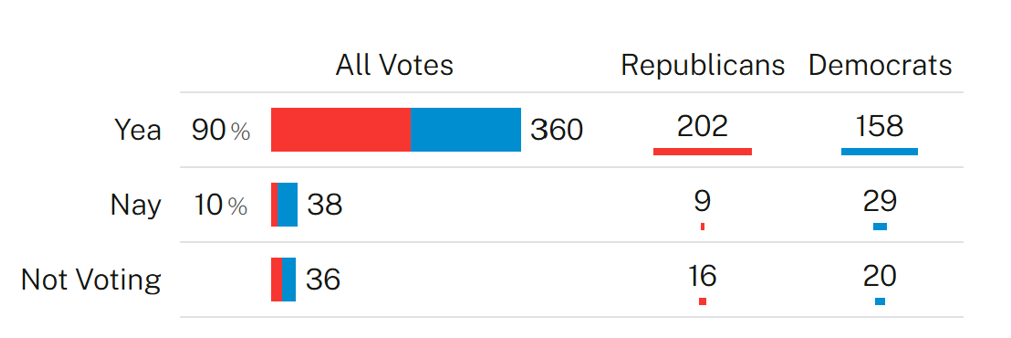
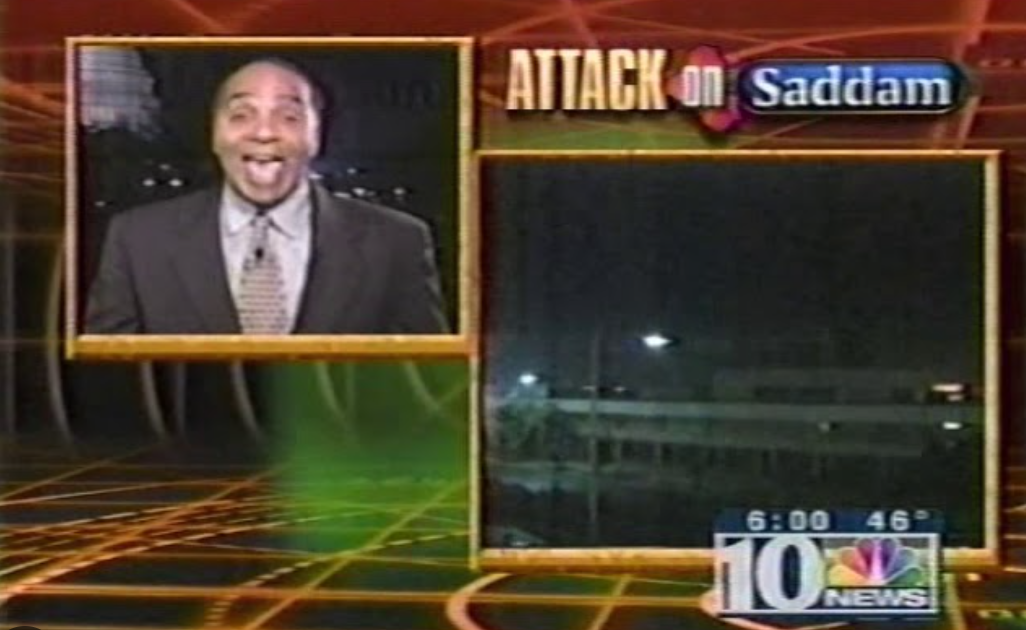
The political seed for the eventual removal of Saddam by the Americans was planted through overt legislation and solidified into U.S. law in October 1998, less than two months prior to the launch of ODF. On 31 October 1998, the Iraq Liberation Act of 1998 was signed into law by President Clinton stating that, “It should be the policy of the United States to support efforts to remove the regime headed by Saddam Hussein from power in Iraq.”[28] Herein one can find the official policy set by the United States against Saddam’s Iraq. WMD was not an invention of the George W. Bush White House nor was it an uncommon phrase to associate with Saddam’s regime prior to 2001. America’s goal to see Saddam’s eventual removal from power, our coercive series of diplomacy through air power and military action, and the shared bipartisan understanding of Iraqi WMDs as a regional threat to American interests did not spontaneously appear after the September 11th Terror Attacks in New York. To better illustrate this, one may find several hours long news recordings of CNN and ABC reporting live from Baghdad in 1998 illustrating what is outlined above during the events of Operation Desert Fox using language such as “WMD and regime change” all over the place.
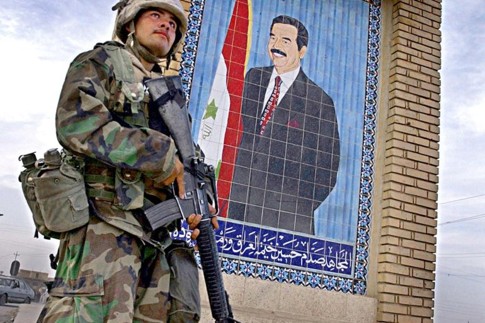
Operation Desert Fox was militarily an undisputed success. Multiple key units of the Republican and Special Republican Guards were hit hard and many of Iraq’s remaining air defense units suffered immensely with no coalition casualties or losses of aircraft. Any further stockpiles of Saddam’s chemical, biological, or nuclear ambitions that remained after 1991 had been effectively suppressed; however, the goal of destabilizing Saddam’s regime and weakening his grip on power in Baghdad had failed. The post-1991 containment of Saddam through a series of low-cost punitive expeditions had been relatively successful in maintaining the status quo. Removing Saddam from power altogether would prove more difficult. Saddam could survive the storm of cruise missiles and precision guided bombs as long as any campaign against him remained short and politically limited. Unless the Americans were willing to sustain an effort to support rebels on the ground with massive air and material support, removing Saddam through force would require invasion, as seen in 2003. Only in our contemporary period have we witnessed the success of short and sharp applications of joint American military expeditionary power with objectively little losses in return. Many modern American standards of the use of force and its limits stem from the post-1991 period prior to September 11th, 2001.
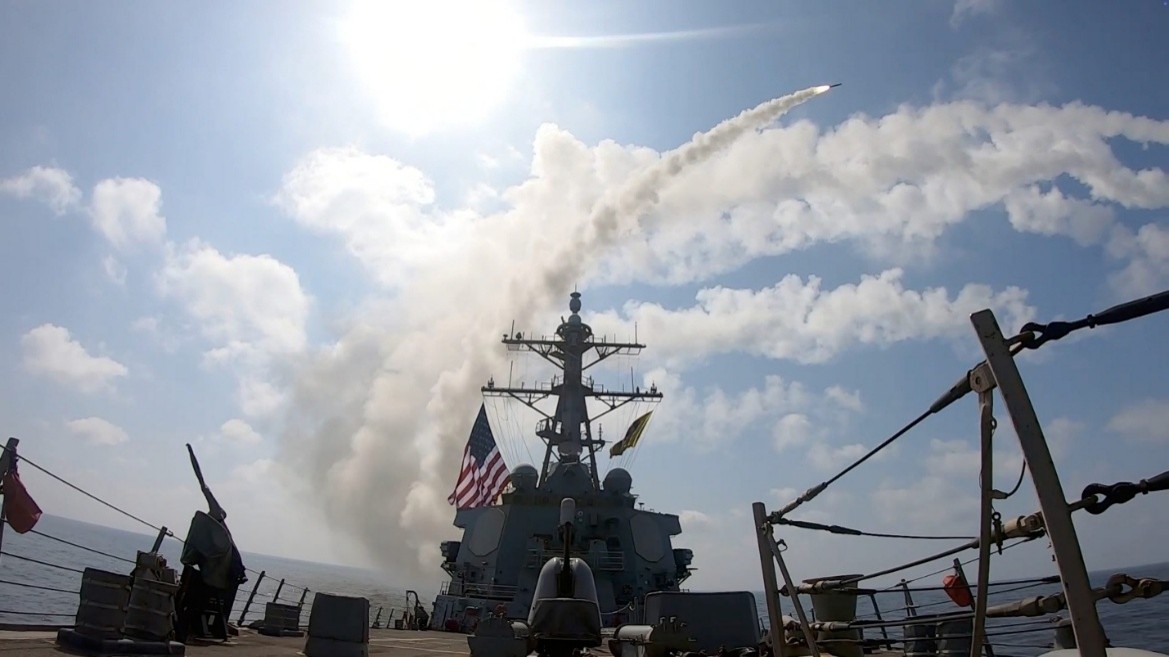
It is vital that future policy makers and military professionals examine the complex series of military exchanges between the Coalition and Saddam throughout the 1990s. Studying ODF can provide contextual understanding of the relationship between Saddam, and the West prior to 9/11. Low-cost high reward usage of American air power and long-range precision strike capability became the American way of war prior to September 11, 2001 and after the follow-on counterinsurgencies of the Global war on Terror (GWOT). The technological advances in long range strike capabilities solidified by the Gulf War proved to be the military intervention methods of choice for many presidential administrations beyond Clinton. The long-term entanglements of the GWOT had a profound physiological effect on the American public’s political will to engage in so called “forever wars”. Fears of “boots on the ground” have created a military environment which makes our joint force’s practicing the art of warfare extremely limited and difficult to master. Unintentionally, what the American public’s attitude post-GWOT has produced now is a military that must fight rapidly to achieve its objectives before the population can react. The experiences of Vietnam, Iraq, and Afghanistan have left an overall near instant negative public approval on the use of American military power abroad. Near instant media coverage of military operations requires fast and almost bloodless expeditions to achieve objectives quickly, outflanking partisan political speculation that could stiffen enemy resolve.
Operations like Desert Fox showcase the importance in developing effective punitive expedition strike warfare that can rapidly contain malign actors through force while outflanking the American public’s anxieties. Professional militaries organize, train, and equip based on the domestic and international realities they face. Our military, perhaps unknowingly, has produced a force design with certain capabilities that can provide the national command authority with options to secure objectives quickly and at relatively low risk to field forces due to the pressures placed on the Armed Forces post-Vietnam and GWOT. Therefore, campaigns such as Desert Fox have become far more important to examine for professional warfighters.
Disclaimer:
The views and opinions expressed in this article are those of the author and do not necessarily represent the views or opinions of the United States Government, U.S. War Department, or Department of the Air Force.
Bibliography:
Withington, Thomas, and Mark Styling. B-1B Lancer Units in Combat. London: Bloomsbury Publishing Plc, 2012.
Conversino, Mark J. “Operation DESERT FOX: Effectiveness with Unintended Effects.” Air University Press, July 13, 2005. https://www.airuniversity.af.edu/Portals/10/ASPJ/journals/Chronicles/conversino.pdf.
Cordesman, Anthony H. “The Lessons of Desert Fox: A Preliminary Analysis.” CSIS Middle East Studies Program, February 16, 1999. https://csis-website-prod.s3.amazonaws.com/s3fs-public/legacy_files/files/media/csis/pubs/dflessons21599.pdf.
Ball, Gregory. “1998 – Operation Desert Fox.” Air Force Historical Support Division. Accessed April 17, 2026. https://www.afhistory.af.mil/FAQs/Fact-Sheets/Article/458976/1998-operation-desert-fox/.
Hada, Zach. “Operation Desert Fox: Recalling the 15th Anniversary of the First B-1 Combat Operation.” Air Combat Command, 28th Bomb Wing, December 18, 2013. https://www.acc.af.mil/News/Article-Display/Article/661488/operation-desert-fox-recalling-the-15th-anniversary-of-the-first-b-1-combat-ope/.
Gilman, Benjamin A. “H.R.4655 – 105th Congress (1997-1998): Iraq Liberation Act of 1998 | Congress.Gov | Library of Congress.” Congress.gov, 1998. https://www.congress.gov/bill/105th-congress/house-bill/4655.
Davies, Peter E. B-52 Stratofortress units in combat 1992-2025. London: Osprey Publishing, 2025.
National Security Council et al., “Declassified Documents Concerning Operation Desert Fox,” Clinton Digital Library, accessed April 19, 2026, https://clinton.presidentiallibraries.us/items/show/101158.
“Iraq: ‘Desert Fox’ and Policy Developments.” House of Commons Digital Library, 1999. https://researchbriefings.files.parliament.uk/documents/RP99-13/RP99-13.pdf.
Kozaryn, Linda. “Saddam Abused His Last Chance, Clinton Says.” DVIDS, 1998. https://www.dvidshub.net/news/529459/saddam-abused-his-last-chance-clinton-says.
Clancy, Tom. Battle Ready. G.P. Putnam’s Sons, 2004.
“DOD PRESS BRIEFING,21 DECEMBER 1998 – REF#:981221-001.” YouTube, December 21, 1998. https://www.youtube.com/watch?v=gfltoJ4Hj54&t=190s.
“DOD PRESS BRIEFING,16 DECEMBER 1998 – REF#:981216-002.” YouTube, December 16, 1998. https://www.youtube.com/watch?v=gP996l_Xhu0.
Notes
- Davies, Peter E. B-52 Stratofortress units in combat 1992-2025. London: Osprey Publishing, 2025. Pg 16. ↩
- Ibid., 16. ↩
- Ibid., 17. ↩
- Clancy, Tom. Battle Ready. G.P. Putnam’s Sons, 2004. CH 3. Pg 1-2. ↩
- Withington, Thomas, and Mark Styling. B-1B Lancer Units in Combat. London: Bloomsbury Publishing Plc, 2012. Pg 36. ↩
- National Security Council et al., “Declassified Documents Concerning Operation Desert Fox,” Clinton Digital Library, accessed April 19, 2026, https://clinton.presidentiallibraries.us/items/show/101158. Pg 141. ↩
- Clancy, Tom. Battle Ready. G.P. Putnam’s Sons, 2004. Pg 4. ↩
- Kozaryn, Linda. “Saddam Abused His Last Chance, Clinton Says.” DVIDS, 1998. https://www.dvidshub.net/news/529459/saddam-abused-his-last-chance-clinton-says. ↩
- Ball, Gregory. “1998 – Operation Desert Fox.” Air Force Historical Support Division. Accessed April 17, 2026. https://www.afhistory.af.mil/FAQs/Fact-Sheets/Article/458976/1998-operation-desert-fox/. ↩
- Hada, Zach. “Operation Desert Fox: Recalling the 15th Anniversary of the First B-1 Combat Operation.” Air Combat Command, 28th Bomb Wing, December 18, 2013. https://www.acc.af.mil/News/Article-Display/Article/661488/operation-desert-fox-recalling-the-15th-anniversary-of-the-first-b-1-combat-ope/. ↩
- Davies, Peter E. B-52 Stratofortress units in combat 1992-2025. London: Osprey Publishing, 2025. Pg 19. ↩
- Ibid., 20. ↩
- Withington, Thomas, and Mark Styling. B-1B Lancer Units in Combat. London: Bloomsbury Publishing Plc, 2012. Pg 37. ↩
- Ibid., 37. ↩
- Ibid., 38-39. ↩
- Ibid., 39. ↩
- Ibid., 40. ↩
- Ibid., 39. ↩
- Davies, Peter E. B-52 Stratofortress units in combat 1992-2025. London: Osprey Publishing, 2025. Pg 20. ↩
- Ibid., 20. ↩
- Ibid., 20. ↩
- Ibid., 20. ↩
- Ibid., 21. ↩
- Conversino, Mark J. “Operation DESERT FOX: Effectiveness with Unintended Effects.” Air University Press, July 13, 2005. https://www.airuniversity.af.edu/Portals/10/ASPJ/journals/Chronicles/conversino.pdf. Pg 6. ↩
- Ibid., 6. ↩
- Ibid. ↩
- National Security Council et al., “Declassified Documents Concerning Operation Desert Fox,” Clinton Digital Library, accessed April 19, 2026, https://clinton.presidentiallibraries.us/items/show/101158. Pg 200. ↩
- Gilman, Benjamin A. “H.R.4655 – 105th Congress (1997-1998): Iraq Liberation Act of 1998 | Congress.Gov | Library of Congress.” Congress.gov, 1998. https://www.congress.gov/bill/105th-congress/house-bill/4655. ↩